 Bosnia

About Zabranjeno Pušenje
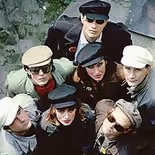
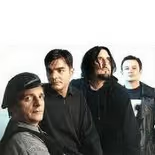
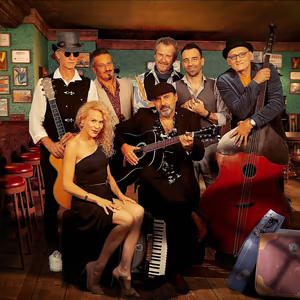
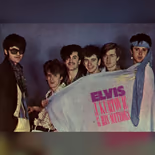
Zabranjeno Pušenje ("No Smoking") is a rock band from Sarajevo, formed in 1980. Its sound is a distinctive garage rock with folk influences, and the band was closely tied to the New Primitivism movement and to the radio and television comedy show Top lista nadrealista. It grew out of a teenage group started in 1979 by two neighbours from Koševo, Nenad Janković, later known as Dr Nele Karajlić, and Davor Sučić, later Sejo Sexon. As Pseudobluz bend Zabranjeno Pušenje they played their first public show at Sarajevo's Dom mladih in December 1980, and their first recording, "Penzioneri na more idu zimi", was made for Radio Sarajevo early in 1981.
The debut album, Das ist Walter, came out on Jugoton in April 1984 in a run of just 3,000 copies and went on to sell 100,000, thirty times the first pressing. During the 60-date tour that followed, Karajlić's remark at a Rijeka concert on 27 November 1984, "Crk'o Maršal. Mislim na pojačalo" (the Marshall has croaked, I mean the amplifier), was taken as a joke about Tito's death; concerts were cancelled and Top lista nadrealista was taken off the air. The double album Dok čekaš sabah sa šejtanom (July 1985) was acclaimed by critics but boycotted by the media; its "Nedjelja kad je otiš'o Hase" is one of the band's best-loved songs.
With a new line-up, with the film director Emir Kusturica on bass, the band released Pozdrav iz zemlje Safari on Diskoton in 1987, with "Pišonja i Žuga", "Hadžija ili bos", "Fikreta" and "Dan Republike". An 87-concert tour followed, and in January 1988 the album earned a gold record for 100,000 copies. After Male priče o velikoj ljubavi (1988) came a hugely successful tour with Bombaj Štampa and the Top lista nadrealista crew, but Sexon and Karajlić fell out, and the band broke up in 1990.
When the Bosnian War began in 1992, Karajlić carried on in Belgrade as Nele Karajlić & Zabranjeno Pušenje, later Emir Kusturica & The No Smoking Orchestra, while Sejo Sexon stayed in besieged Sarajevo and later revived the band under its original name with Elvis J. Kurtović. Fildžan viška (1997), with "Mile Hašišar" and "Pubertet", and the live Hapsi sve! (1998) were followed by Agent tajne sile (1999), whose "Jugo 45" was the band's fastest-selling single, and Bog vozi Mercedes (2001), which sold more than 35,000 copies; its "Arizona Dream" won the 2002 Davorin award for best rock song.
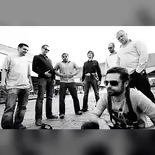
Led by Sexon, with drummer Branko Trajkov, guitarist Toni Lović, bassist Dejan Orešković, formerly of Divlje Jagode, and violinist Robert Boldižar, the band has since released Hodi da ti čiko nešto da (2006), Muzej revolucije (2009), released on 7 November in five countries on the same day, Radovi na cesti (2013), Šok i nevjerica (2018) and the double album Karamba! (2022), along with live albums from St. Louis, Sarajevo's Skenderija, Zagreb's Šalata and the Lisinski concert hall.
In the Rock Express Top 100 Yugoslav Rock Songs of All Times, compiled in 2000 by the Serbian magazine Rock Express from the votes of readers, critics and musicians, "Nedjelja kad je otiš'o Hase" was ranked 28th and "Balada o Pišonji i Žugi" 72nd.
Known for
- Nedjelja kad je otiš'o Hase
- Balada o Pišonji i Žugi
- Zenica Blues
- Fikreta
- Dan Republike
- Jugo 45
- Mile Hašišar
- Arizona Dream
 Croatia
 Serbia
 Slovenia
 Montenegro