 Serbia

About Korni Grupa
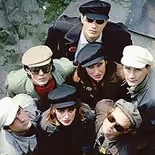
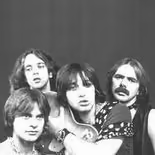
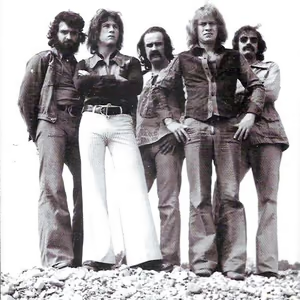
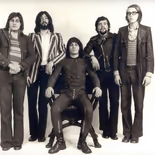
Korni Grupa was a Yugoslav rock band formed in Belgrade in 1968 and named after its founder and leader, the keyboardist Kornelije "Bata" Kovač, who had just left Indexi. With bassist Bojan Hreljac, drummer Vladimir Furduj and guitarist Velibor Kacl, all from well-known bands, it is often considered the first Yugoslav supergroup. Throughout its run the band worked on two tracks at once: commercial pop rock for festivals and the charts, and ambitious progressive rock coloured by folk, jazz, psychedelic and symphonic music.
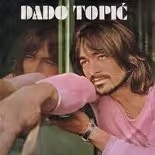
The singers changed quickly. Miroslava Kojadinović left after refusing to sing a song she found too commercial, and Dušan Prelević sang the 1969 Jugovizija entry "Cigu-ligu". With Dalibor Brun came the first hits, "Magična ruka", "Sonata" and "Dzum-ram", and the folk-tinged "Pastir i cvet" won an award for the most original act at a festival in Scheveningen. Dado Topić then took over and brought guitarist Josip Boček. With Topić the band won both the audience and the jury award at the 1970 Zagreb festival with "Jedna žena", scored the film Bube u glavi, and had a big hit with "Trla baba lan", which Dalida covered in French as "Ram Dam Dam". In 1971 they recorded the rock epic "1941." with Josipa Lisac as a guest, and they also wrote music for Olivera Katarina.
Topić left to form Time, and Zdravko Čolić sang with the band for six months before starting his solo career. With Zlatko Pejaković came the debut album Korni Grupa (1972), one of only four full-length Yugoslav rock albums at the time, with the long "Put za istok", and an appearance at the Montreux Jazz Festival. Under the name Kornelyans they released the English-language Not an Ordinary Life on Italy's Ricordi, while at home "Ivo Lola", "Etida" and "Divlje jagode" were successes.
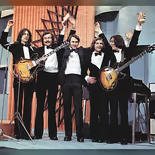
In 1974 "Moja generacija" won the Opatija festival and took Korni Grupa to the Eurovision Song Contest in Brighton, where they finished 12th. Disappointed by that and by the English album's reception, Kovač ended the band after two farewell concerts at Studio M in Novi Sad; it officially split on 1 December 1974. Part of those shows appeared on Mrtvo more, the first double album in Yugoslav rock, and "1941." came out as a posthumous album in 1979.
The band reunited with Topić for the Legende YU Rocka concerts in 1987 and for a farewell concert at the Sava Centar on 31 January 2019, shortly after Hreljac's death. Kovač died in Belgrade on 13 September 2022. In the book YU 100: najbolji albumi jugoslovenske rok i pop muzike, Korni Grupa was ranked 4th and 1941. 94th among the best Yugoslav albums. In the Rock Express Top 100 Yugoslav Rock Songs of All Times, a poll of the Serbian magazine Rock Express, started in 1999 and published in 2000, in which more than 3,400 readers, 120 journalists and critics and 100 musicians each chose five songs, "Put za istok" was ranked 44th and "Jedna žena" 67th.
Known for
- Put za istok
- Jedna žena
- Trla baba lan
- Moja generacija
- Magična ruka
- Ivo Lola
- Etida
- Pastir i cvet
 Croatia
 Bosnia



 Slovenia

 Montenegro