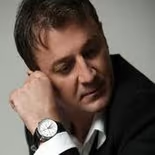
 Serbia
About Zorán Sztevanovity
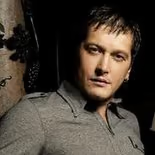
Zorán Sztevanovity, known in Hungary simply as Zorán, is a singer, guitarist and composer, one of the best-loved names in Hungarian pop. He was born Zoran Stevanović on 4 March 1942 in Belgrade, the son of the economist and journalist Milutin Stevanović, and that Serbian birth and family is why he is on Muzika-Balkan. When he was a small child the family moved to Hungary, and they settled for good in Budapest. He has lived in Hungary ever since; Hungarian Wikipedia calls him a Hungarian performer of Serbian origin.
He finished school in Budapest and studied electrical engineering at the Budapest University of Technology, until music won. In 1960 he founded the band Zenith, which a year later took the name Metro after the Metro Klub where it played. In 1963 he won the television talent show Ki mit tud? as a soloist with Gershwin's "Summertime". Metro, with his brother Dusán on rhythm guitar, became one of the three great Hungarian beat bands beside Illés and Omega, made two albums, including the first Hungarian live album, and about 40 singles before it broke up in 1972.
After a spell with the band Taurus and some months playing in Austria and West Germany, he went solo. In 1976 his Hungarian version of "Save Your Kisses for Me", "Csókokkal vársz", became a big hit. His first solo album, Zorán (1977), made with the pianist and composer Gábor Presser, went gold and became one of the most successful Hungarian albums ever; it carried his best-known song, "Apám hitte". Zorán II and Zorán III followed, a trilogy. Most of his songs are composed by Presser with lyrics by Dusán, and he has also sung Hungarian versions of Leonard Cohen, Mark Knopfler, Chris Rea and Sting. "Ne várd a májust", written by János Bródy, and "Játssz még!", a duet with Kati Kovács that topped the charts in 1982, are among his classics.
In 2011 he released Körtánc - Kóló, an album in which, in the words of Hungarian Wikipedia, he returned musically to his Serbian roots; the kolo is a South Slavic round dance, and the album went platinum in 2012. His big arena concerts were released as live albums, among them Aréna 2019. His honours include the Franz Liszt Prize (1982) and the Kossuth Prize (2006). The playlist is the album Körtánc - Kóló.
Known for
- Apám hitte
- Ne várd a májust
- Volt egy tánc
- Kóló
- Játssz még!
- Szépek és bolondok
- Csókokkal vársz
- Esküvő




 Bosnia
 Croatia