 Serbia
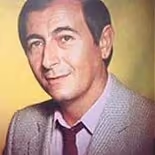
About Nedeljko Bilkić
Nedeljko Bilkić is a Serbian singer of folk music and one of the best-known voices of the sevdalinka, born on 3 March 1941 in Bugojno, in today's Bosnia and Herzegovina. He is on Muzika-Balkan under Serbia because he built his career in Belgrade and the Serbian Wikipedia calls him a Serbian folk singer. He lived in Canada from 1982 to 1997, where his sons and grandchildren still live, and today he lives in Belgrade.
He grew up with his mother, who was musical, and her brothers were musicians too, so songs were all around him. He finished a secondary technical school in Kragujevac and then the Faculty of Mechanical Engineering in Belgrade. Soon after arriving in Belgrade he passed an audition at Radio Belgrade, and on the advice of Safet Isović he studied solfège and singing with the opera singer Anita Mezetova.
His first single, "Tebi majko misli lete", came out on PGP RTB in 1963. By the end of the 1970s he had made about 50 singles, and his first LP followed in 1972; he also recorded for Jugoton, Beograd disk, Diskos, ZAM and PGP RTS. In all he has released about 30 albums and around 80 singles and has written more than 300 songs for himself and other singers, among them "Kad umoran budem pao" for Novica Negovanović.
Festivals made his name. He first sang at Ilidža in 1965 with "Ne pitaj me stara majko" and won first prize, and he won Ilidža again in 1967, 1968, 1969, 1970, 1972 and 1974. He won the Beogradski sabor in 1968 and 1969 and Zlatni glasovi in West Germany in 1974. In 1968 he received the first Golden Microphone and was named singer of the year, as he was again in 1974.
His best-known songs include "Krčma u planini", "Most do moga zavičaja", "Odmori se majko", "Ja mlad pijem noći", "Amanet mi babo ostavio", "Kuća je bez tebe prazna" and "Ti si sve što imam". Albums such as Veseli se srce moje (1975), Odmori se majko (1979), Most do moga zavičaja (1985) and Potrošio jedan život (1997) span his career. He is married to the singer Dušica Bilkić, his partner on the duets "Nije zlato sve što sija" and "Sedam godina sreće".
In 2019 he was named a national estrada-music artist of Serbia, the highest honour of the Serbian association of estrada artists, and in 2020 he received the Šaban Šaulić award for interpretation. The playlist gathers sixty of his recordings from 1963 to 1986, mostly sevdalinke.
Known for
- Krčma u planini
- Most do moga zavičaja
- Tebi majko misli lete
- Ne pitaj me stara majko
- Odmori se majko
- Ja mlad pijem noći
- Čaša vina liječi rane
- Amanet mi babo ostavio

 Bosnia



 Slovenia


 Montenegro