 From Bosnia
About Safet Isović
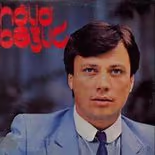
Safet Isović, born in 1936 in Bileća in Herzegovina, was a Bosnian singer of sevdalinka, nicknamed the King of Sevdah, and one of the most important performers of the genre in the second half of the twentieth century. For more than fifty years he sang the old Bosnian love songs, and he remains a model for young sevdah singers.
As a child he became a refugee in 1941, when his family fled to Banja Luka, where he went to elementary school. After the war he lived and studied in Bileća, Trebinje and Slavonski Brod, finishing school there in 1955. That year he moved to Sarajevo to study law, and he lived in the city for the rest of his life.
Friends at the university talked him into joining the student folk ensemble Slobodan Princip Seljo, and then into auditioning for Radio Sarajevo. He failed the first audition and passed the second, and after a year of lessons he recorded his first two songs, "Kad ja pođem iz Sarajeva grada" and "Kasno prođoh kraj Morića hana", first broadcast on 6 April 1957. His first solo concert was at Dom sindikata in Belgrade on 19 March 1963.
At the Ilidža festival he won with "Jablani se povijaju" in 1964, with "Sjaj mjeseče žut" in 1970, with "Hajro, Hajrija, curo najmilija" in 1971 and with "Lovačka pjesma" in 1975, and "Kad sretneš Hanku" took third place at the Beogradski sabor in 1970. He received the Golden Microphone, about 35 gold and silver records and the estrada awards of Bosnia and Herzegovina and of Yugoslavia, and he was the only singer from the former Yugoslavia to perform at the Sydney Opera House.
His anthology recordings include "Moj dilbere", "Đul Zulejha", "Zmaj od Bosne" and "Vrbas voda nosila jablana". He sang many duets, with Zaim Imamović, Nada Mamula, Meho Puzić, Mile Petrović and Beba Selimović, and helped make sevdalinka a song of the wide public.
During the war of the 1990s he spent time in Zagreb before returning to Sarajevo, where he gave a large solo concert at Zetra on 29 May 2003. Safet Isović died in Sarajevo on 2 September 2007 and was buried in the grounds of the Ali Pasha Mosque. At his memorial at the National Theatre, Beba Selimović called him the father of sevdalinka.
Known for
- Moj dilbere
- Kasno prođoh kraj Morića hana
- Đul Zulejha
- Jablani se povijaju
- Hajro, Hajrija, curo najmilija
- Kad sretneš Hanku
- Zmaj od Bosne
- Vrbas voda nosila jablana
 Serbia



 Slovenia



 Montenegro