 From Slovenia
About Štirje kovači
Štirje kovači ("The Four Blacksmiths") were a Slovenian narodnozabavna (folk-pop) ensemble from Slovenj Gradec in Koroška. They played without a break from 1954 to 2025, a quintet with two singers, and they are best remembered for the waltz "Kam le čas beži", a song that has become almost a folk song in its own right.
The ensemble was founded in 1954 by four young men who worked in the forging plant of the Tovarna kos factory in Slovenj Gradec: baritone player Viktor Breznik, clarinettist and saxophonist Maks Klančnik, trumpeter and singer Tine Lakovšek, and accordionist and singer Franc Šegovc. They had already played for about two years as Ansambel Maks under Klančnik, who handed the leadership to Šegovc in 1954.
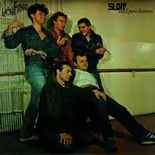
Their first recordings were made in 1955 for the Radio Ljubljana programme Za našo vas. In 1964 they won the competition of folk ensembles at the Gospodarsko razstavišče in Ljubljana, and a year later they released their first EP, photographed as blacksmiths in a smithy at Ježica for a cover that is still one of the best-known pictures in Slovenian folk music. Over the years they released more than forty records, three of them in German.
The line-up changed slowly. Leopold Krajnc took over the clarinet in 1968, Šegovc's wife Hermina joined as a singer in 1972, Viktor Vrhovnik replaced Lakovšek on trumpet in 1980, and in 1990 and 1991 guitarist Jože Sedar, singer Srečko Sedar and baritone player Zdenko Zdovc came in. Franc Šegovc wrote and arranged all of the melodies, more than six hundred of them, and many lyrics too.
They first went abroad in 1969, at the invitation of the Slovenska izseljenska matica, made three long tours of the United States and Canada and two of Western Europe, and played many concerts in Germany, Switzerland, Austria, Italy and the former Yugoslavia. "Kam le čas beži" won the Zlati petelin award in 2000 and was named the tune of the century, and in 1997 Šegovc was crowned king of polkas and waltzes. A 2012 record of his songs featured guests such as Modrijani, and for their 60th anniversary in 2014 they recorded the album Kovaških 60 let.
In December 2021 the ensemble received a Guinness World Records certificate as the longest-running folk ensemble in the world, after almost 67 years on stage. Franc Šegovc died on 25 August 2025, and with his death the ensemble came to an end. Besides "Kam le čas beži", their best-loved songs include "Čakal sem ob potoku", "Gremo na Pavre", "Mala solzica", "Moji mamici", "Pridi zvečer" and "Rženova Tinka".
Known for
- Kam le čas beži
- Čakal sem ob potoku
- Gremo na Pavre
- Mala solzica
- Moji mamici
- Pridi zvečer
- Rženova Tinka

 Serbia

 Bosnia





 Montenegro