 Serbia

About Ljiljana Petrović
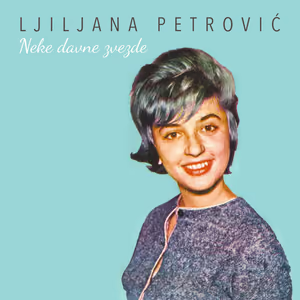
Ljiljana Petrović was a Serbian pop singer, born on 21 February 1939 in Bosanski Brod and brought up in Novi Sad. She began singing in local clubs and restaurants, and in 1960, at Mali Lošinj, she was noticed by the head of Jugoton. While she was recording in Ljubljana, the composer Jože Privšek heard her and wrote for her "Neke davne zvezde", with lyrics by Miroslav Antić.
With that song she won the first Jugovizija, held on 16 February 1961 in Ljubljana, and in Cannes she became Yugoslavia's first ever entrant at the Eurovision Song Contest, with the first song sung there in Serbo-Croatian. She performed fifth on the night and finished eighth of sixteen, with nine points. The next Yugoslav entrant was Lola Novaković. In 1963 Ljiljana Petrović returned to Jugovizija in Belgrade and took third place with "Tabakera".
She recorded for Jugoton and PGP-RTB and sang at festivals all over the country. At the Zagreb festival in 1962 "K'o crne ruže cvet" won the chanson evening, and in 1963 she sang "Stanica u predgrađu" there in alternation with Tereza Kesovija. Her biggest hit was "Neka to ne bude u proleće", sung at Opatija in 1966 in alternation with Ivo Robić. At Belgrade Spring she sang "Mali pastir" (1964) and "Živi bez mene" (1966, in alternation with Stevan Zarić), which won the journalists' award, and in 1967 she took third place at the Golden Orpheus in Bulgaria.
In the 1970s she sang at Vaš šlager sezone, at the schlager festival in Dresden and at Akordi Kosova, where "Bekime, Bekime" won the expert jury's and the journalists' awards in 1971. She also sang tamburica and Pannonian songs at Zvuci Panonije in Osijek and at the Slavonija festival, where in 1980 she sang a duet with Mladen Kozjak.
After leaving the music scene she wrote haiku poetry and composed songs inspired by it, and in 1991 she published a book of poems. Ljiljana Petrović died in Novi Sad on 4 February 2020.
Known for
- Neke davne zvezde
- Neka to ne bude u proleće
- Mali pastir
- Živi bez mene
- K'o crne ruže cvet
- Tabakera
- Bekime, Bekime


 Croatia




 Bosnia