 From Bosnia
About Hari Mata Hari
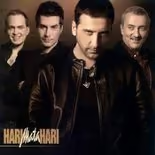
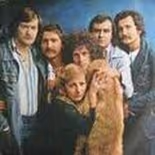
Hari Mata Hari is a pop band from Sarajevo, Bosnia and Herzegovina, and the stage name of its singer and composer Hajrudin "Hari" Varešanović, born on 16 January 1961 in Sarajevo. He grew up in the Vratnik quarter, sang as a boy with the groups Omi and Sedam šuma, joined Zov in 1979 and then Ambasadori, and in 1984 released the solo album Zlatne kočije.
The band took shape in 1985, after he and members of the group Baobab won the Nove nade, nove snage festival. Their first album, U tvojoj kosi, came out in 1985; its title song came fifth at the 1986 Yugoslav Eurovision selection, and "Nebeska kraljica" came fourteenth in 1987. Ne bi te odbranila ni cijela Jugoslavija (1986) was voted album of the year, and Ja te volim najviše na svijetu (1988), Volio bi' da te ne volim (1989) and Strah me da te volim (1990) sold more than 300,000, 500,000 and 700,000 copies. He sang duets with Tajči and, on "Ja ne pijem", with Haris Džinović.
The war stopped most of the band's work from 1991 to 1994; Ostaj mi zbogom, ljubavi was released in 1994 in exile in Germany, the year Hari recorded a new version of Zov's "Poletjela golubica" with Halid Bešlić, and a new line-up came together in 1997 and 1998. In 1999 Hari was chosen to sing for Bosnia and Herzegovina at Eurovision, but was disqualified because "Starac i more" had already been sold to Finland, and Dino Merlin went instead.
The 2000s brought "Kao domine", the first Davorin song of the year in 2002, and duets with Hanka Paldum ("Crni snijeg"), Ivana Banfić ("Navodno", 2003), Kemal Monteno ("Zakon jačega") and Nina Badrić. In 2006 Hari Mata Hari represented Bosnia and Herzegovina at Eurovision in Athens with "Lejla", composed by Željko Joksimović, and finished third with 229 points; former member Pjer Žalica directed its video.
Sreća (2009) won the Croatian Radio Festival Grand Prix, and Ćilim followed in 2016. English Wikipedia counts more than 1,000 concerts and five million albums sold.
Known for
- U tvojoj kosi
- Ja te volim najviše na svijetu
- Strah me da te volim
- Ja ne pijem
- Kao domine
- Ružmarin
- Lejla
- Sreća

 Serbia


 Croatia