 From Croatia
About Senna M
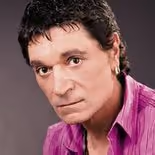
Senna M is the stage name of Senad Galijašević, a singer, producer and inventor born on 1 June 1954 in Vitez, Bosnia and Herzegovina. He has lived in Zagreb since 1984, and the sources call him both a Bosnian-Herzegovinian and a Croatian musician. He had two careers in pop: as Senad od Bosne in the Yugoslav years, and as Senna M on the Croatian dance scene of the 1990s.
Music started early, at six, in a tamburica orchestra in Sanski Most, but he was drawn to rock and roll and blues. He played in the groups Prinčevi and Gas, sang for two years in the band of Neda Ukraden, and got the name Senad od Bosne from Nikola Borota. His song "Šal", recorded at Studio Bosna in 1978, became a hit across Yugoslavia, and "Jasmina" followed in 1986. Goran Bregović once considered him as the singer of Bijelo dugme, a place that went to Alen Islamović.
In 1987 he turned to production. In his Nostradamus studio in Zagreb, ET made "Tek je 12 sati", he produced and arranged "Kuda idu izgubljene djevojke" for Boris Novković, and he wrote "16 godina" for Anamarija Đumbrek, which won an award at Zagrebfest in 1992. Then he came back as Senna M with the dance song "Beba", staged at Zagrebfest with dozens of dancers. "Beba malena", as people call it, "Indijanac" and "Selma" were his hits of the 1990s, on the albums Čovjek s neba (1995) and Izvor (2002).
Later he built a second career in film technology. His company in Zagreb's Peščenica makes cameras and lighting used on Game of Thrones, Vikings and Star Wars, and at the end of 2022 he received an Emmy for engineering, science and technology, together with the Croatian company Stype. He has not left the stage altogether: in 2023 he appeared in the Croatian Masked Singer, and on 9 February 2024 he sang "Beba", "Indijanac" and "Čovjek s neba" at the Megadance party in Arena Zagreb.
Known for
- Beba
- Indijanac
- Selma
- Tuc-tuc
- Čovjek s neba
- Šal
- Jasmina
- 16 godina

 Serbia

 Bosnia