 From Slovenia
About Ditka Haberl
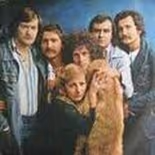
Ditka Haberl, born Judita Haberl on 19 November 1947 in Maribor, is a Slovenian pop singer. She sang with Bele vrane from 1967 to 1974 and then with Pepel in kri, and went on to a solo career that took her to the big festivals all over Yugoslavia.
Her first entries at the Slovenska popevka festival were "Vse ali nič" in 1970 and "Čuk" by Mojmir Sepe in 1971. In 1973 she sang two songs there, "Rojstvo" alone, which won the jury's award for the best arrangement, and "Letalovlak" with Bele vrane. "V meni raste drevo" by Jože Privšek followed in 1974, and in 1976 his "Samo nasmeh je bolj grenak" won both the first prize of the international jury and the first audience prize. "Utrujena ljubezen" (1977), "Kaj je sreča" (1979) and "Kako naj ti povem" (1980) brought more awards.
With Pepel in kri she represented Yugoslavia at the Eurovision Song Contest 1975 in Stockholm with "Dan ljubezni", finishing 13th, and with the group she also sang "Kot nekdo, ki imel me bo rad" and appeared at festivals in Opatija, Split, Belgrade and Sarajevo.
As a soloist she sang "Vila z rimskega zidu" at Beogradsko proleće in 1972, "More, more" at the Split festival in 1973 and "Mlade oči" in Opatija the same year. In the early 1980s she recorded duets with Branko Blaće, among them "Za nas je dovoljna ljubav" and "Vrijeme je za uspomene", sung at the Zagreb festival in 1982. In 1985 she returned to Opatija with "Nad mestom se dani", one of her best-known songs. Her solo album Zaljubljena came out in 1979, and the compilation Vse je igra in 2006.
In the 1980s she also joined the opera chorus of the Maribor Opera. Her former husband, Tadej Hrušovar, was also a member of Bele vrane; they have a son and a daughter.
Known for
- Nad mestom se dani
- Samo nasmeh je bolj grenak
- Mlade oči
- Vila z rimskega zidu
- Dan ljubezni
- V meni raste drevo
- More, more
- Vrijeme je za uspomene

 Serbia

 Bosnia

 Croatia