 From Bosnia
About Elvis J. Kurtović & His Meteors
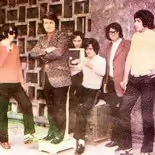
Elvis J. Kurtović & His Meteors was a punk rock band from Sarajevo, formed in 1981 as one of the products of the New Primitivism movement. Its founder and leader was Mirko Srdić, better known by his stage name Elvis J. Kurtović. He wrote the lyrics and set out the band's ideas, and at concerts he stood on stage strumming an unplugged guitar, now and then taking the microphone. Satire, covers of world rock classics and Sarajevo humour gave the band a cult following across Yugoslavia.
The group was founded by Srdić together with Davor Sučić "Sejo Sexon" and Dražen Janković "Seid Karajlić" of Zabranjeno pušenje, at a time when most members of that band had left for the army. Guitarist Dražen Ričl "Zijo", drummer Radomir Gavrilović "Hare" and singer Goran Petranović "Rizo" soon joined, and wild concerts followed. When the Pušenje members came back, Sejo Sexon left, but he kept writing lyrics with Elvis and appeared at the band's concerts and on its albums. The name came from a joke: a rock'n'roll-loving neighbour, Jasmin Kurtović, had named his son Elvis, so the band called itself "Elvis Jasmina Kurtović". The neighbour sued, the court banned the name, and "Jasmina" shrank to a "J".
The debut album, Mitovi i legende o kralju Elvisu, was recorded at the Akvarijus studio, produced by Elvis, Raka Marić and Goran Vejvoda, and released in 1984 by RTV Ljubljana. It was built as a "thematic radio show" about "the biggest star of rock'n'roll, Mr. Elvis J. Kurtović", with satirical covers such as "Baščaršy Hanumen" (The Rolling Stones' "Honky Tonk Women") and "Ćiza-vizard" (The Who's "Pinball Wizard"), plus "Kad se babo vrati kući pijan" and "Folk Raping", a disco song in which Elvis introduces the band. All the songs were written by Sejo Sexon and Elvis, and Margita Stefanović of Ekatarina Velika played keyboards.
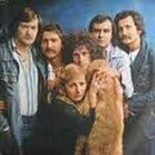
With Rizo, Zijo, Hare, bassist Nermin Dedić "Fićo" and keyboardist Zoran Degan "Poka", the band released Da bog da crk'o rok'n'rol in 1985, produced by Boris Bele, with guests Borut Činč of Buldožer and singer Anja Rupel. The title track, another Rolling Stones cover ("It's Only Rock'n'Roll"), was its biggest hit, alongside "Ljubav je jaka", "Surfing at Bembasha" and "Ćerka jedinica", which later appeared on an album by Bombaj štampa.
Zijo then left to found Crvena jabuka with Zlatko Arslanagić, and the band paused for three years. In a new line-up it returned in 1988 with Čudesan svet privatluka / The Wonderful World of Private Business, produced by Zoran Redžić of Bijelo dugme and Mustafa Čengić, a parody of the new class of private entrepreneurs, with songs such as "Šta da radi insan", "Zašto ljubav boli" and "Haile Selasije". Nele Karajlić guested on "E.J.K. Rapping".
The war in Bosnia and Herzegovina stopped the band and took the life of Zoran Degan "Poka". Rizo moved to Belgrade, while Elvis stayed in besieged Sarajevo and took part in the wartime Top lista nadrealista. After the war he helped Sejo Sexon rebuild Zabranjeno pušenje and recorded Fildžan viška (1997) and Agent tajne sile (1999) with them. The compilations Hitovi '83-'88 (1996) and Najgori hitovi (1998) kept the songs in circulation, and in 2011 Rizo released the album Koševo zove under the name Elvis Jr. Kurtović.
Known for
- Da bog da crk'o rok'n'rol
- Baščaršy Hanumen
- Ljubav je jaka
- Surfing at Bembasha
- Ćerka jedinica
- Kad se babo vrati kući pijan
- Folk Raping
- Šta da radi insan
 Croatia
 Serbia


 Slovenia